Poster Presentation at WashU Rare Disease Symposium
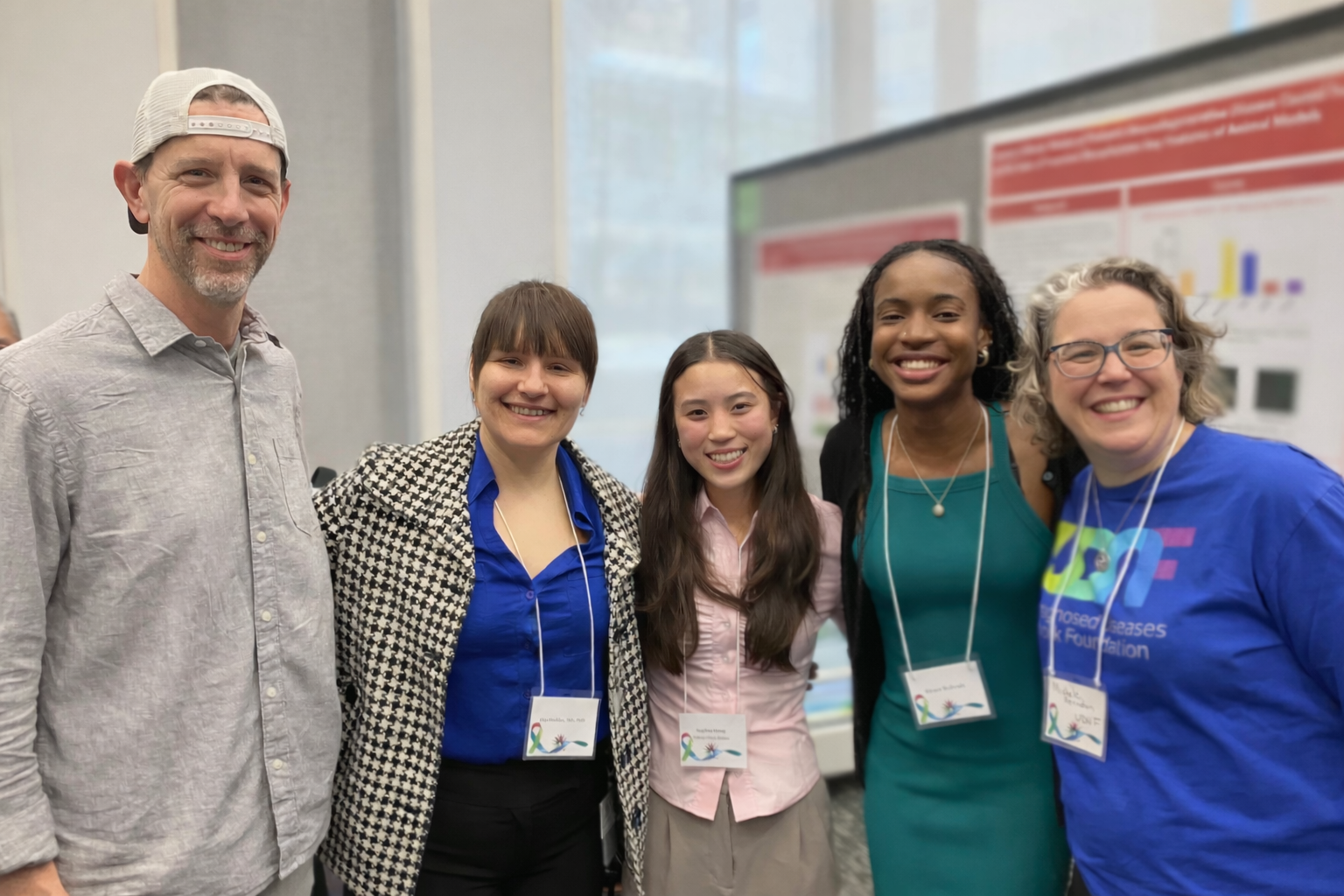
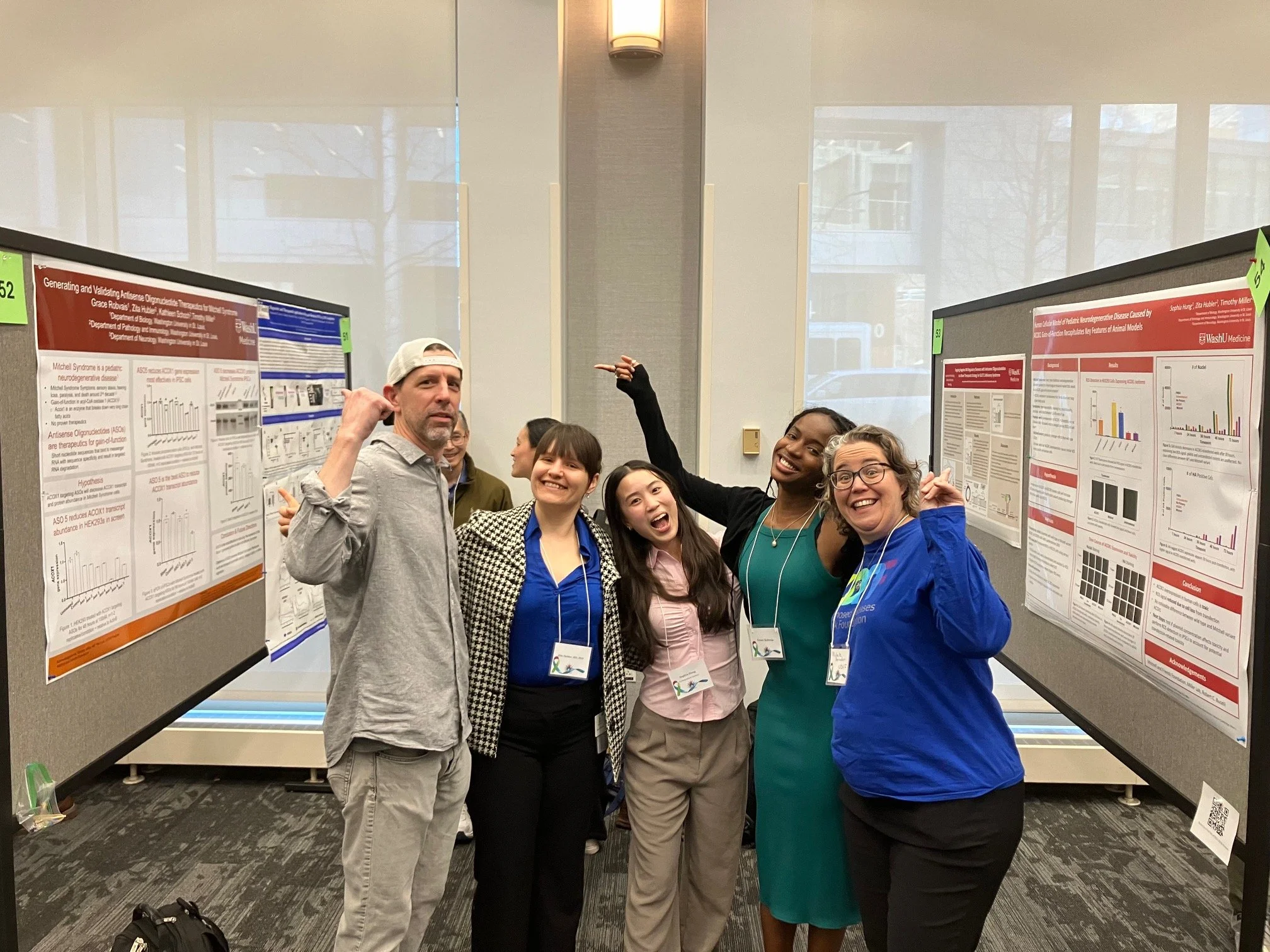
From left to right: Matt Herndon with M&F, Dr. Zita Hubler with The Miller Lab, WashU student Sophia Hung, WashU student Grace Robvais, Michele Herndon with M&F.
POSTER PRESENTATIONS AT RARE DISEASE SYMPOSIUM
Last week, Washington University hosted it’s annual “Rare Disease Symposium.” The event brings together speakers, scientists, and organizations to collaborate on the challenges and opportunities of rare disease research.
We are proud to announce that Mitchell Syndrome was featured at the Symposium—along with the progress researchers have made toward understanding the disease.
Dr. Zita Hubler, a researcher with The Miller Lab at WashU, is the lead scientist investigating Mitchell Syndrome. Two of her undergraduate students presented posters on what they have learned.
Sophia Hung shared a poster called, “Human Cellular Model of Pediatric Neurodegenerative Disease Caused by ACOX1 Gain-of-Function Recapitulates Key Features of Animal Models.”
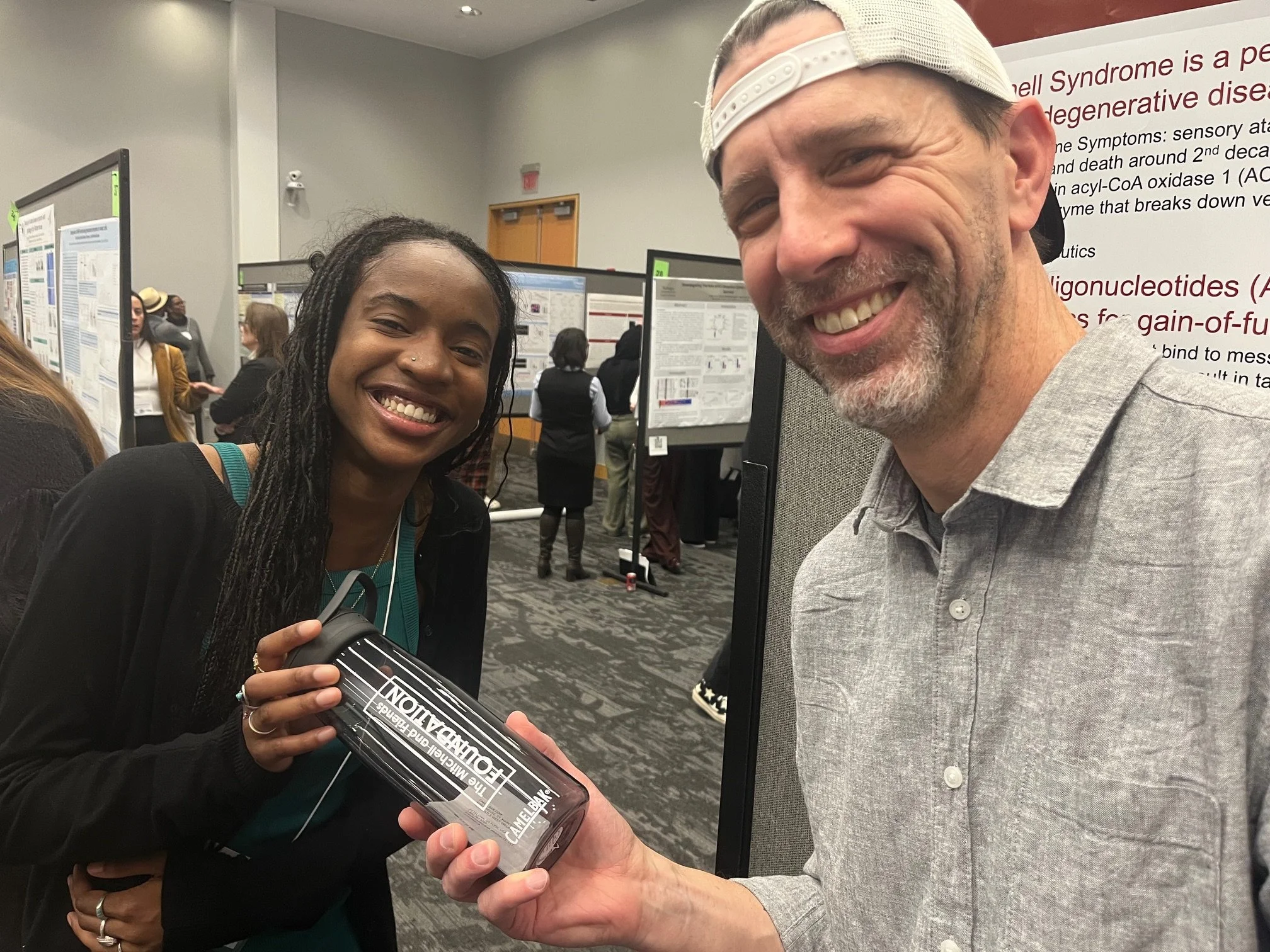
Grace Robvais showed a poster called, “Generating and Validating Antisense Oligonucleotide Therapeutics for Mitchell Syndrome.”
Sophia’s research shows that highly overexpressing ACOX1 is toxic to human cells. Grace’s research compared multiple ACOX1-targeting ASOs in human Mitchell Syndrome cells. She identified a top candidate ASO for further studies toward translation into Mitchell Syndrome patients.
We are grateful for The Miller Lab’s commitment to understanding and treating Mitchell Syndrome—and to Washington University, for creating a place for collaboration on rare diseases to take place.
With this sort of collaboration and scientific investigation, we can defeat the rarest of rare diseases.